Visual identity for the exhibition Anastas Jovanović (1817–1899) – a pioneer of applied art and design
Project Summary
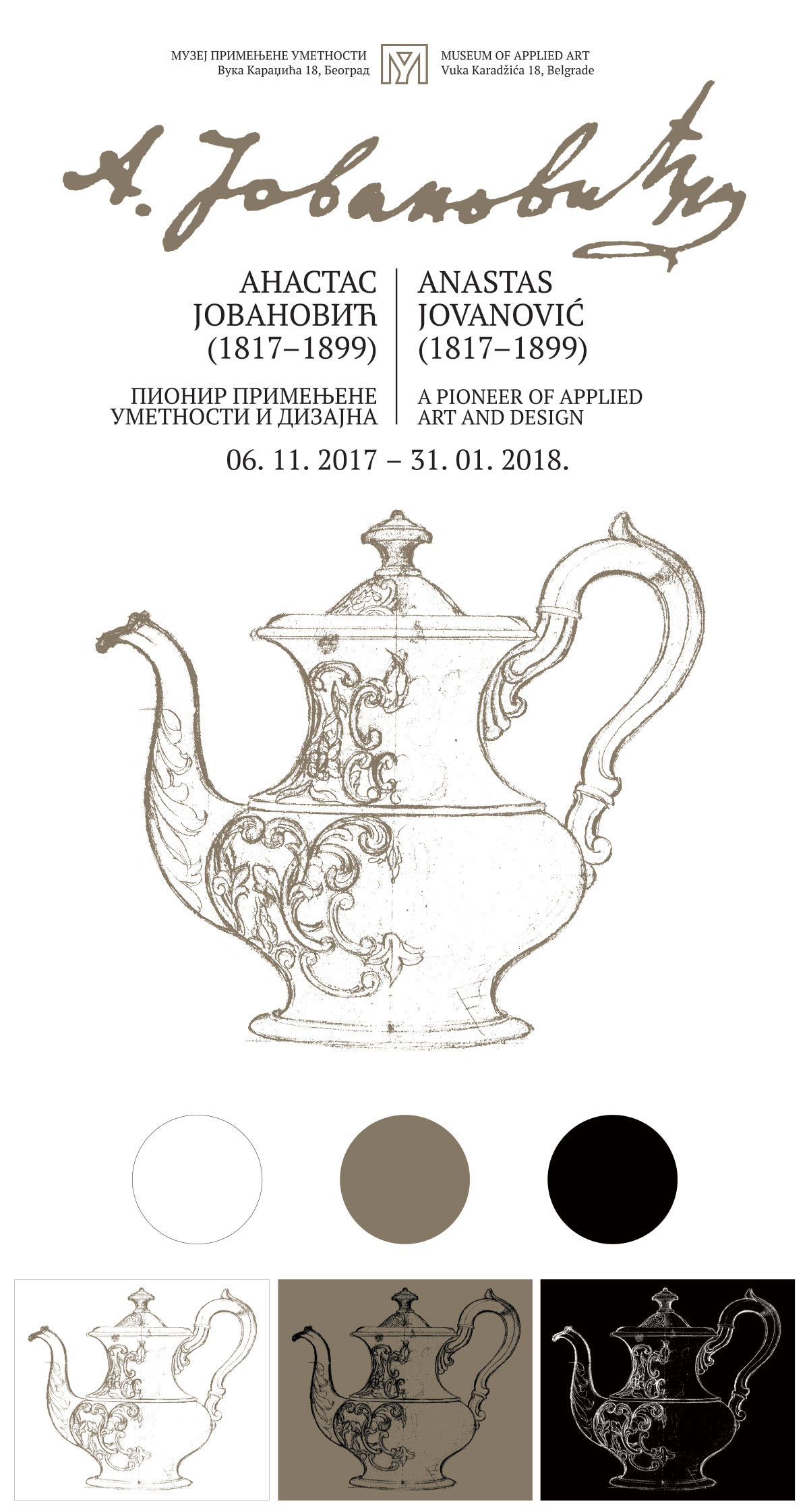
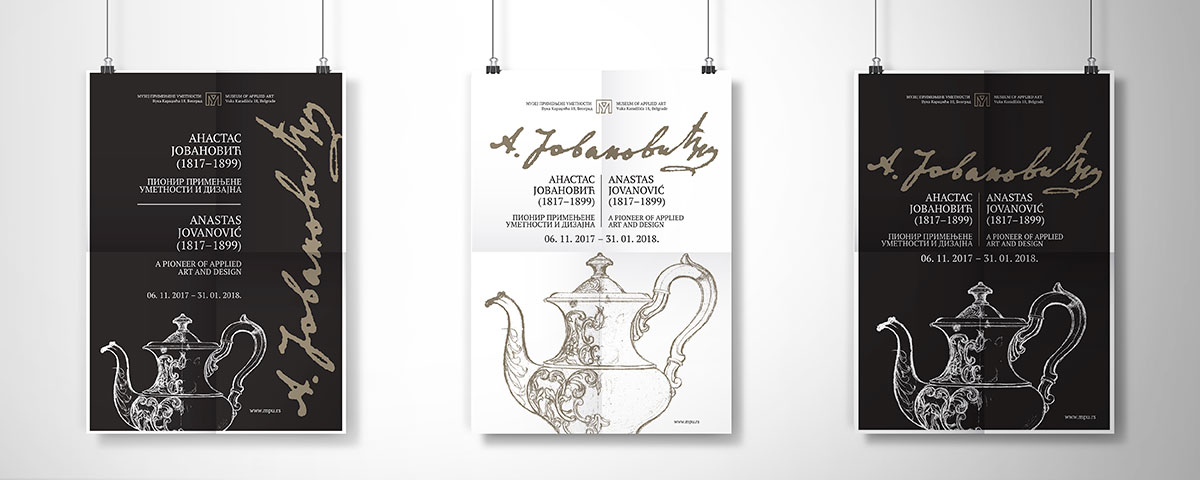
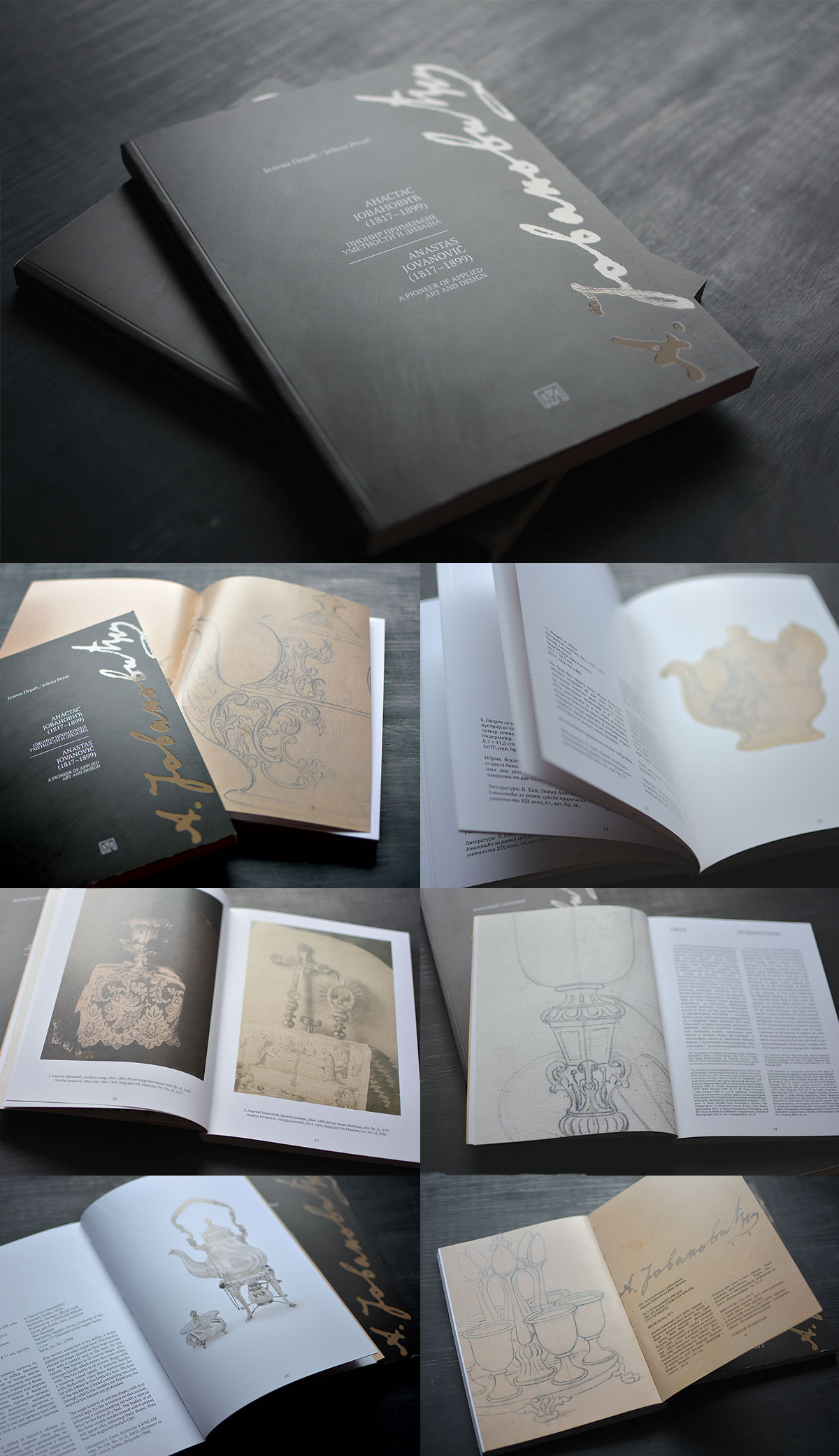
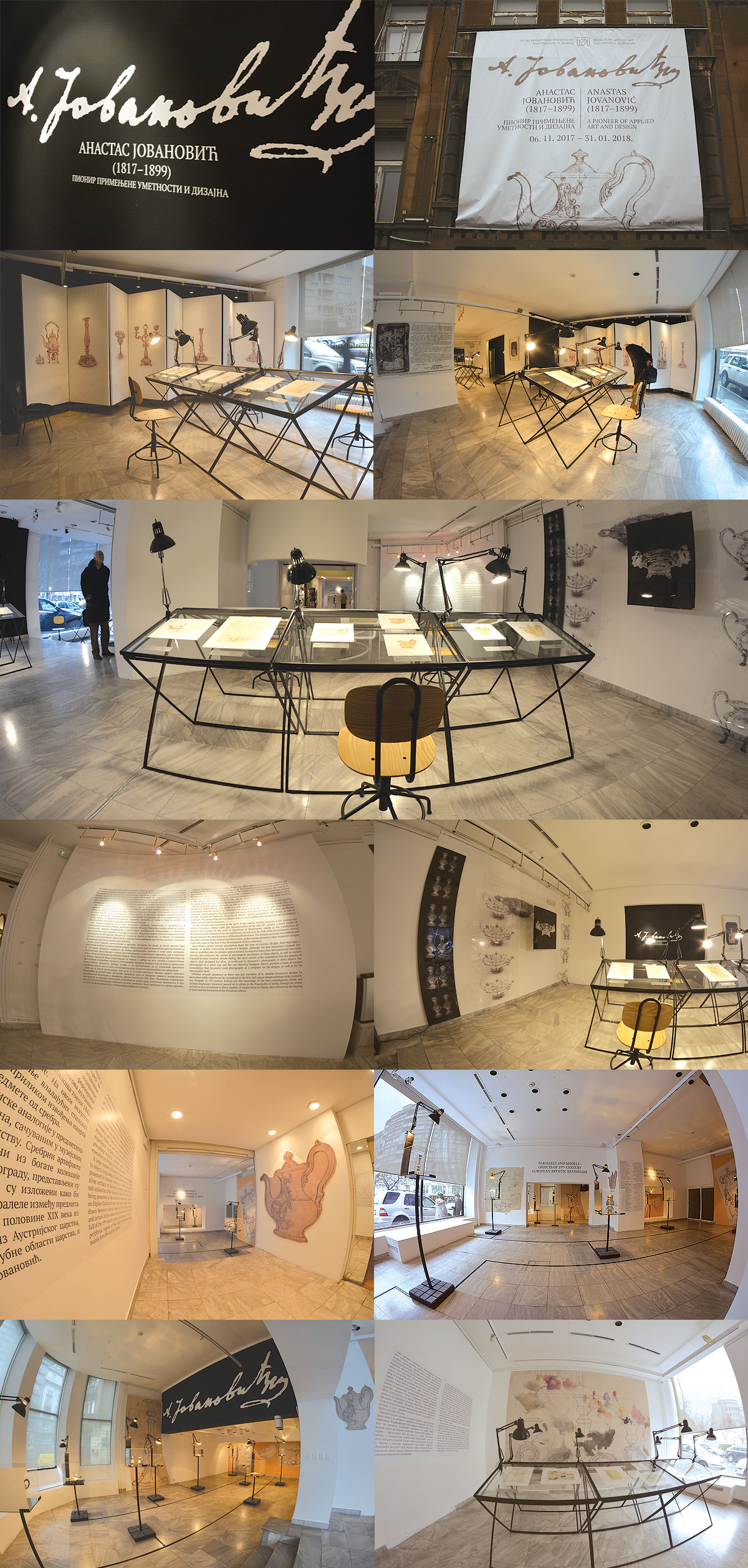
Visual identity and exhibition design for the landmark exhibition Anastas Jovanović (1817–1899) – A Pioneer of Applied Art and Design, commissioned by the Museum of Applied Art in Belgrade. The project included the exhibition identity, catalogue design, posters, exhibition graphics, and printed environmental elements, creating a cohesive visual language that guided visitors through the exhibition while supporting both academic research and public engagement.
Project Overview
Commissioned to mark the Museum’s anniversary and the 200th anniversary of Anastas Jovanović’s birth, this project required the development of a complete visual identity for a major museum exhibition. The work extended far beyond publication design, encompassing every printed communication element—from promotional materials to large-scale exhibition graphics—ensuring consistency across the entire visitor experience.
The challenge was to create a contemporary visual system that respected the historical significance of the subject while remaining accessible and engaging for modern audiences.
Inspiration & Concept
The identity was inspired by Jovanović’s own work.
Rather than introducing contemporary graphic gestures, the visual language draws directly from his original drawings, signature, and delicate ornamental line work. A restrained palette of black, warm grey, and off-white allows the historical material to remain central, while elegant typography and generous white space create a quiet, museum-like atmosphere throughout the printed materials and exhibition environment.
The result is a design system that supports the artefacts rather than competing with them.
Design Solution
The project brought together editorial design, exhibition graphics, and environmental communication into one coherent visual identity.
The catalogue, exhibition panels, large-format graphics, posters, and promotional materials all share the same visual language, allowing visitors to move seamlessly between printed publications and the physical exhibition. Careful attention was paid to hierarchy, readability, production, and installation, ensuring that the identity remained effective across formats ranging from books to architectural-scale graphics.
The final outcome demonstrates how thoughtful visual design can strengthen cultural storytelling while supporting curatorial content and enhancing the visitor experience.